Since 2020, TAConnect has partnered with the Kano State Primary Health Care Board (KSPHCB) to strengthen Reproductive, Maternal, Newborn, and Child Health (RMNCH) services at the PHC level through the Group Antenatal Care (GANC) project. This strong foundation of collaboration paved the way for a deliberate expansion into immunization, demonstrating TAConnect’s enduring commitment to maternal and child health while intentionally aligning with state priorities to ensure more children are reached with life-saving vaccines.
When TAConnect entered the immunization space in Kano State, the scale of the challenge was clear. The 2021 National Immunization Coverage Survey revealed that only 10% of children were fully immunized, while 30% were zero-dose, entirely unvaccinated. With 15 of Nigeria’s 100 priority zero-dose local government areas concentrated in Kano, the state’s burden was both urgent and nationally significant. Deep-rooted cultural norms, persistent structural barriers, and limited access to services compounded the problem, despite the availability of vaccines and the presence of frontline health workers.
“From a leadership standpoint, our vision was clear,” explained TAConnect’s Executive Director, Dr. Lilian Anomnachi. “We knew we had to go beyond traditional interventions and adopt solutions that were both context-driven and system-sensitive. Thanks to support from the Pfizer Foundation, we envisioned a model that not only addressed supply-side gaps but also unlocked the demand-side barriers that kept caregivers from accessing routine immunization. Our goal wasn’t just short-term impact; it was about building sustainable systems that could be replicated across underserved regions.”
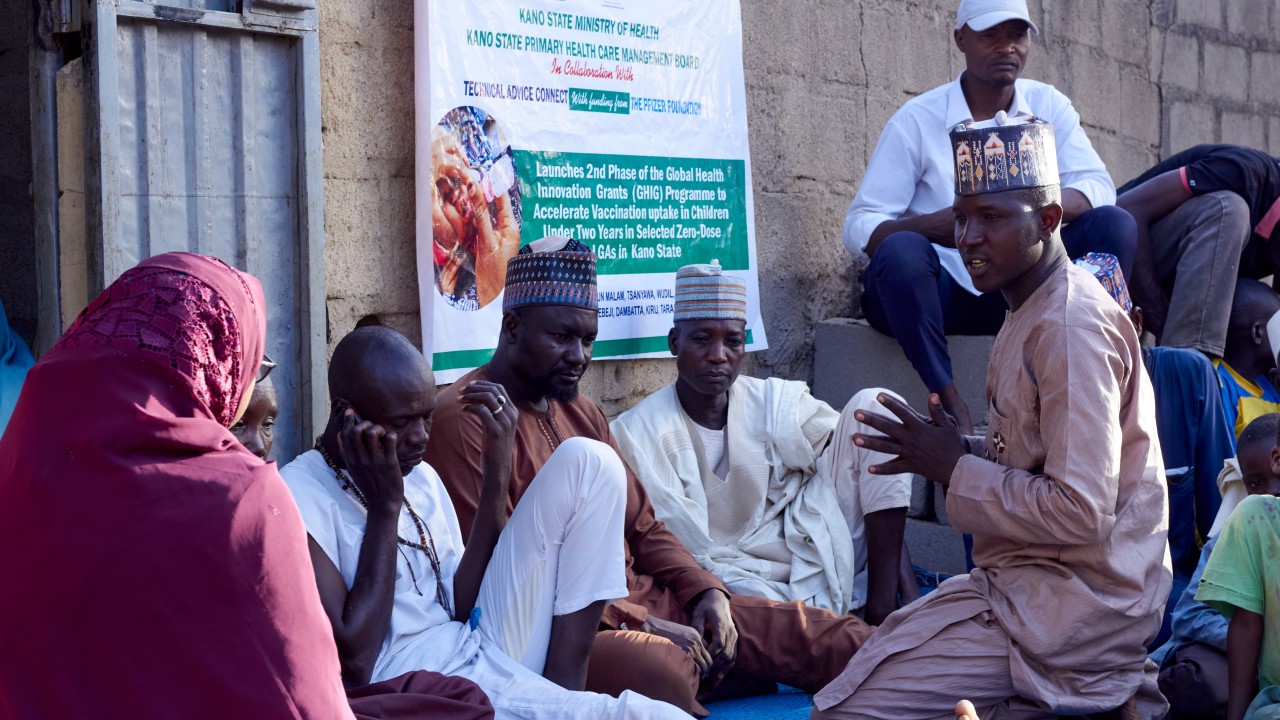
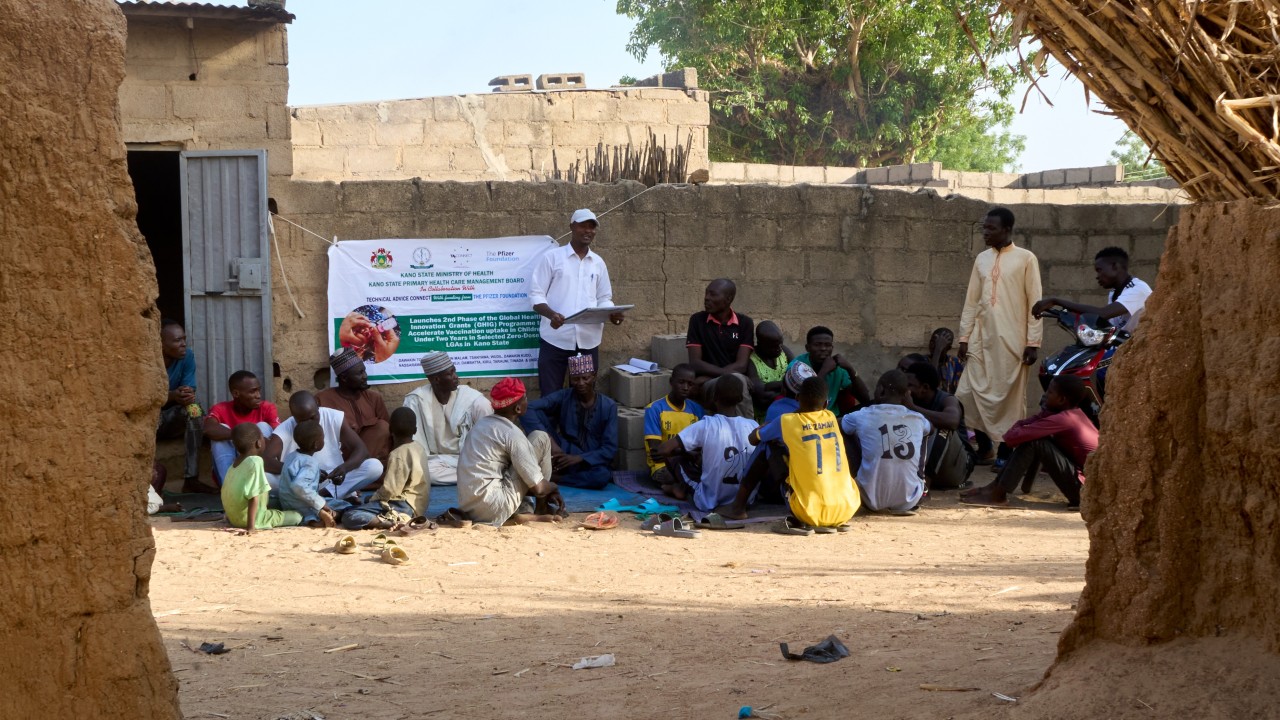
Technical Advice Connect (TAConnect), in collaboration with the Kano State Primary Healthcare Management Board (KSPHCMB) and with funding from the Pfizer Foundation, implemented the project titled “Accelerating Vaccination Uptake in Children Under Two Years in Selected Zero-Dose LGAs in Kano State” under the Global Health Innovation Grant round 8 (GHIG 8). The project officially launched in May 2024, building on the gains of GHIG 7, which initially focused on improving rotavirus vaccine uptake in high-burden LGAs. GHIG 8 expanded the scope significantly, rolling out a state-led intervention across 90 Primary Health Care (PHC) facilities in 15 LGAs, carefully selected across Kano’s six geopolitical zones to ensure equity of access.

At the heart of this approach was Human-Centered Design (HCD), which placed caregivers, health workers, and community leaders at the center of solution-making. Rather than designing programs from afar, TAConnect and its partners went into communities to listen, understand, and co-create. “Human-Centered Design compels us to see challenges and solutions through the eyes of those most affected,” Dr. Anomnachi added. “By listening first, we built interventions that were empathetic, responsive, and trusted.”
For TAConnect’s Technical Director, Dr. Layi Jaiyeola, this marked a paradigm shift. “Immunization programs often struggle because the root causes of vaccine hesitancy are not addressed,” he explained. “The difference with this grant was that we deliberately took in the perspectives of caregivers, fathers, mothers, and community leaders. By doing so, we created interventions that were client-centered, more relevant, and more effective. This sense of ownership is what set the program apart.”
The results from this integrated approach were remarkable. From September 2024 to April 2025, the intervention reached 11,348 children under two years of age, with outreach sessions contributing 26–28% of vaccination coverage in the state. Comparing coverage from August 2024 (baseline) to April 2025 (endline) for both fixed and outreach sessions, the intervention achieved significant improvements across key vaccines. Pentavalent 1 coverage increased from 7% to 12%, Measles 1 coverage rose from 6% to 9%, and Rota 3 coverage improved from 7% to 8%. These results demonstrate notable progress in childhood immunization coverage over the eight-month implementation period.

In line with TAConnect’s iterative and adaptive approach to program design and implementation, which is anchored on HCD principles, it was established that caregivers had unmet needs for reproductive and maternal health services. This insight facilitated the co-design and implementation of integrated wraparound RMNCH and WASH services into the immunization program, leveraging existing systems and platforms at the state and community levels. “Integration meant more value for families and more efficiency for the system,” said Dr. Jaiyeola. “Instead of one service, caregivers received a holistic package that improved both child and maternal health outcomes. From a donor perspective, it created better value for money. From the community’s perspective, it built deeper trust.” A total of 12,659 women received WASH counselling, with 4,697 (37%) referred to health facilities for follow-up care.
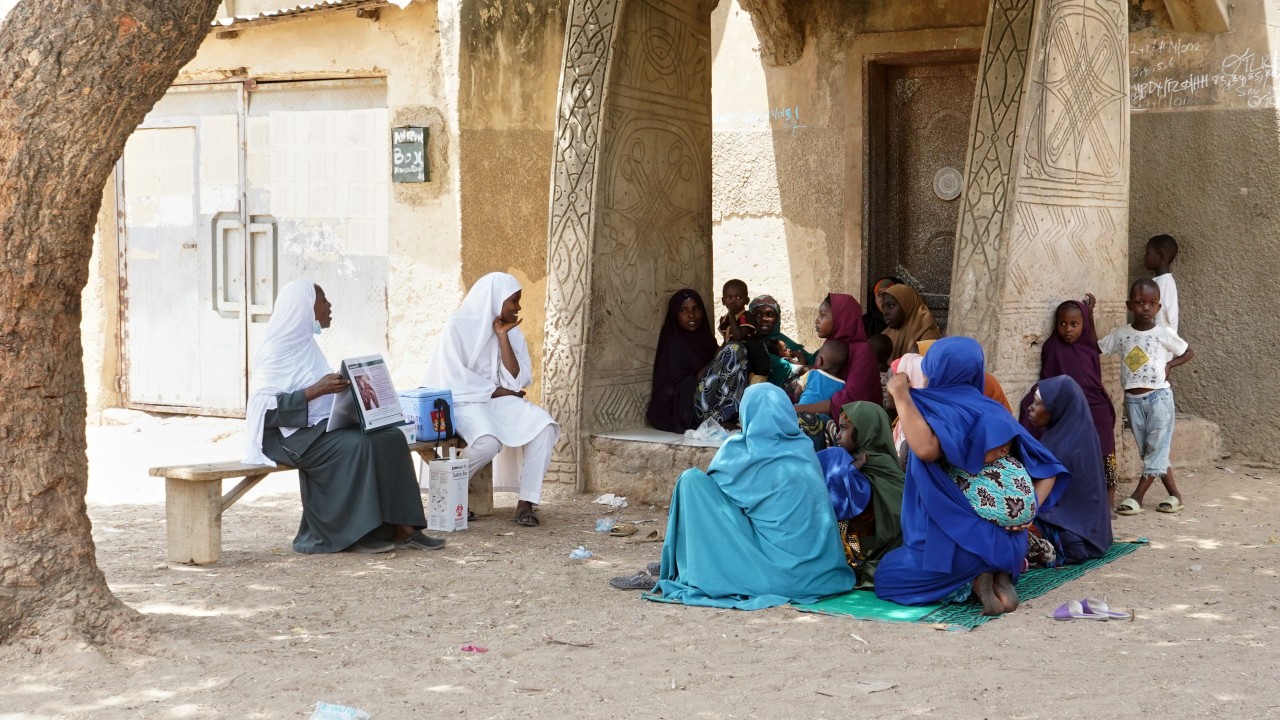
By strengthening both the demand and supply sides, the project tackled systemic barriers holistically. Health workers were better equipped to deliver quality services, while families had easier access to them, often right at their doorsteps. This reduced financial burdens like transport costs, while also helping to address misconceptions and gender barriers that had previously fueled vaccine hesitancy.
The lessons from Kano are clear. Integration creates efficiency and impact. Human-Centered Design ensures interventions respond to real needs. And ownership by state authorities, health workers, and communities alike is what drives sustainability. “Local problems demand local solutions,” reflected Dr. Jaiyeola. “By co-creating with the state and communities, we built a model that can outlast projects and transform how health services are delivered.”
What began as an urgent response to a zero-dose crisis in Kano has become a blueprint for the future of immunization and primary healthcare, demonstrating that when government, partners, and communities work hand in hand, no child needs to remain unreached.