When Kano State emerged as one of Nigeria’s major contributors to the national zero-dose burden with 15 of the 100 priority local government areas, it became clear that urgent, systemic interventions were needed. Deep-rooted cultural beliefs, societal norms, and longstanding access barriers had led to persistent immunization gaps, despite the state’s efforts to maintain vaccine supply, deploy qualified health personnel, and provide cold-chain infrastructure.
“The state is doing what it can to ensure all vaccines are available, storage facilities are ready, and human resources are in place 100 percent. But you still notice issues tied to cultural beliefs and community norms. These are some of the factors keeping Kano in this situation,” said Auwal Idris, Program Manager of the Kano State Emergency Routine Immunization Coordination Centre (SERICC).
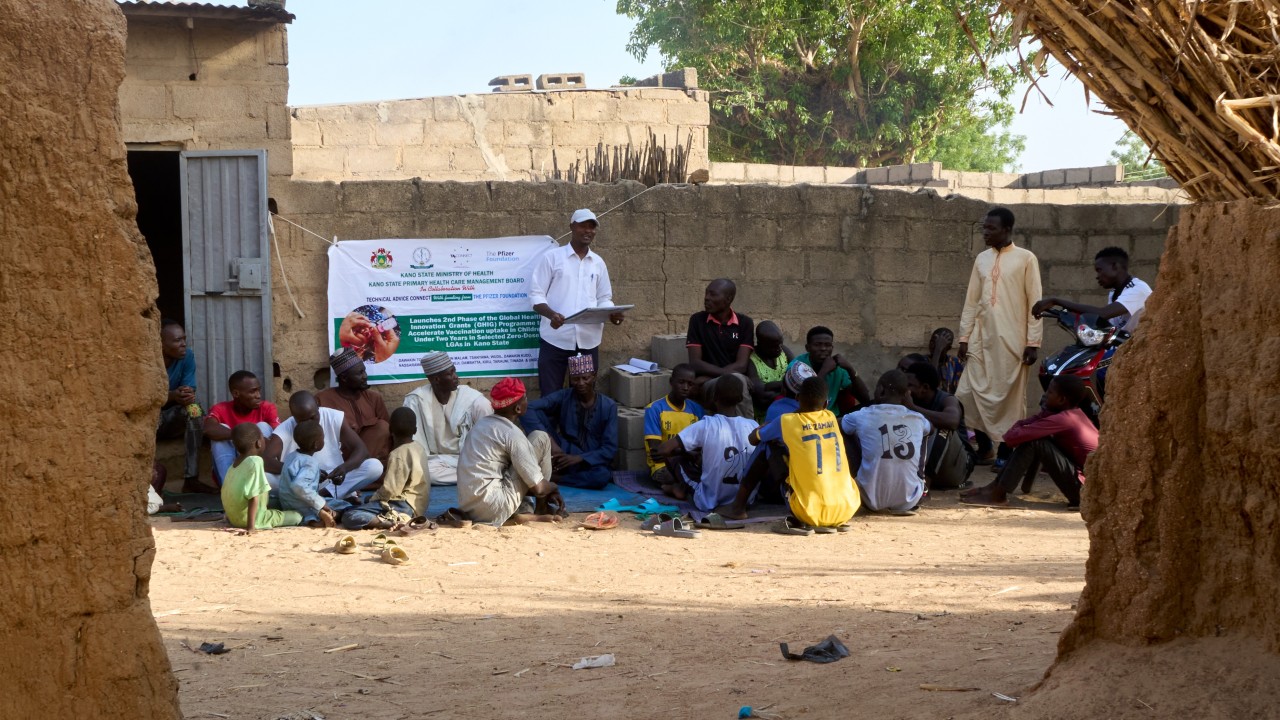
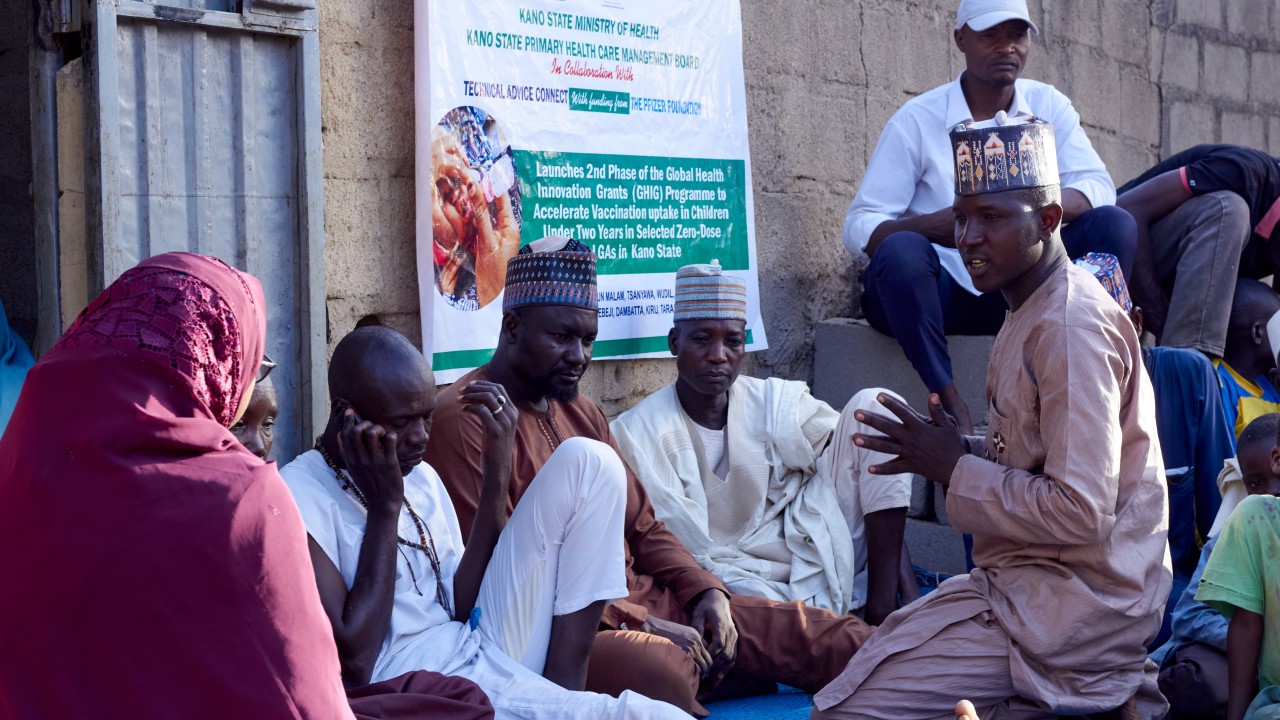
To address these challenges, Technical Advice Connect (TAConnect), in collaboration with the Kano State Primary Healthcare Management Board (KSPHCMB) and with funding from the Pfizer Foundation, implemented the project titled “Accelerating Vaccination Uptake in Children Under Two Years in Selected Zero-Dose LGAs in Kano State” under the Global Health Innovation Grant round 8 (GHIG 8).
The project officially launched in May 2024, building on the gains of GHIG 7, which initially focused on rotavirus vaccine uptake in high-burden LGAs. GHIG 8 expanded the scope significantly, rolling out an ambitious, state-led intervention across 90 Primary Health Care (PHC) facilities in 15 LGAs, carefully selected across Kano’s six geopolitical zones for equity of access.
At the core of the project was a human-centered design (HCD) approach, a deliberate shift from top-down planning to community-informed program design. Rather than assume what solutions would work, the project invested in listening to caregivers, health workers, and community stakeholders to identify barriers and co-create interventions tailored to local needs. This ensured that interventions directly addressed vaccine hesitancy, gender barriers, access constraints, and local norms, improving not only service uptake but also community trust and ownership.

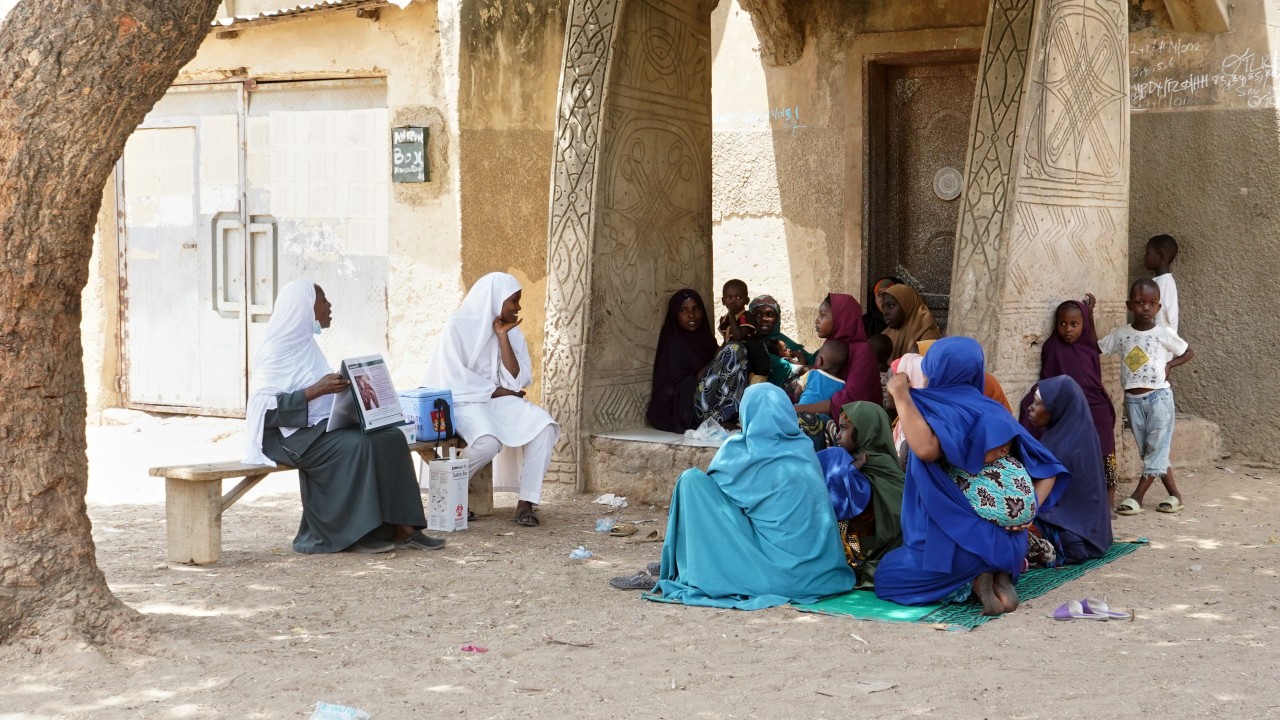
To ensure both demand and supply sides of immunization were addressed, TAConnect and KSPHCMB implemented a dual-pronged system-strengthening approach. On the supply side, efforts focused on improving cold chain capacity, health worker training, and data systems. On the demand side, the project delivered services closer to households through structured community outreach and engagement, reducing out-of-pocket costs and transportation barriers for caregivers.
“With the coming of TAConnect, when you look at the baseline, a lot of improvement was achieved,” Idris explained. “TAConnect helped the state address rotavirus uptake. Then in the second phase, all routine immunization antigens were included, so the good innovations from phase one could be replicated and scaled.”
The strategy was simple but strategic: scaling outreach sessions from one to two per week in 90 health facilities to close access gaps. This doubled service availability and significantly improved access across project LGAs. These outreach sessions were not only focused on routine immunization, but they were also bundled with Reproductive, Maternal, Newborn, Child Health + Nutrition (RMNCH+N) services and further complemented by community health worker engagement, capacity building, and community dialogues.

The result was remarkable. TAConnect-supported outreaches successfully reached 11,348 children under two years, effectively closing critical immunization gaps among zero-dose populations. Pentavalent vaccine coverage increased across all doses, with improvements ranging from +22% to +80% in various LGAs. Rotavirus vaccines saw even steeper gains, including a +100% increase for Rota 3 in Rano LGA. Measles 1 coverage improved by as much as +83% in Minjibir LGA, reflecting the strength and consistency of the intervention.
On average, TAConnect-supported outreaches contributed to increasing vaccination uptake by 26–28% of all children vaccinated during the project period. This underscores the critical role of community-level delivery in bridging access gaps and reaching underserved populations. The uptick in coverage also helped rebuild trust in routine immunization services and repositioned health facilities as reliable service points in previously unreached communities.
Community-level interventions such as structured dialogues, household visits, and male engagement forums further drove impact. The data reflected this: TAConnect-supported LGAs saw significantly higher data quality, stronger coordination, and improved vaccine coverage across multiple antigens.
“You can see improvements in data quality where TAConnect has implemented. The data is more complete and accurate compared to LGAs where they didn’t work,” Idris noted. “And the activity wasn’t just for rotavirus; it covered all antigens.”
TAConnect also supported Kano’s shift from traditional state-level microplanning to PHC-based microplanning, promoting integration across verticals like family planning, maternal care, and routine immunization.
“We now plan for all services together,” said Idris. “It’s not just about routine immunization anymore; family planning, nutrition, and maternal-child health are all in one plan.”
The project emphasized real-time data use to drive decision-making. Weekly dashboards and accountability trackers flagged performance gaps and informed targeted action at the facility, LGA, and state levels.
“We now have weekly updates on performance to see how many facilities have reported, who sent reports, and who didn’t. That’s what guides our weekly actions and decisions,” Idris shared.
As the GHIG 8 phase concludes, Kano State is working actively to sustain and scale the model. Ownership, integration into annual operational plans, and strengthened partner coordination mechanisms position the intervention for long-term continuity.
“TAConnect has built a blueprint. With or without them, we’ll act like TAConnect is still here,” Idris emphasized. “From data quality to early outreach and vaccine documentation, these best practices can spread across all LGAs.”
“Honestly, I would say, if I may be allowed, we need to scale up. From 15 LGAs to all 44 in the state.”addressing concerns, and raising awareness on the life-saving power of vaccines

This partnership in Kano is more than a success story. It is a model for co-designed, integrated, community-rooted primary healthcare delivery in high-burden contexts. It shows what is possible when states lead, communities are heard, and partners support with evidence, innovation, and a collaborative mindset.